

In the world of Near Field Communication (NFC) lies a challenge that often goes unnoticed but profoundly affects performance – metalwork’s impact on antenna detuning. As NFC technology becomes increasingly ubiquitous, understanding this phenomenon is crucial for engineers, designers, and consumers alike.
At the heart of NFC lies the resonant frequency of 13.56MHz, a frequency chosen for its balance between data transfer speed and efficiency. The antenna’s ability to resonate at this frequency is paramount for reliable communication between devices.
The NFC reader antenna consists of an antenna coil, which is matched to the reader IC. This antenna coil, as shown in Fig 1,
- generates the magnetic field to provide the power to operate a passive transponder device (PICC),
- transmits the data from the reader (PCD) to the (PICC), and
- receives the data from the PICC to the reader (PCD).
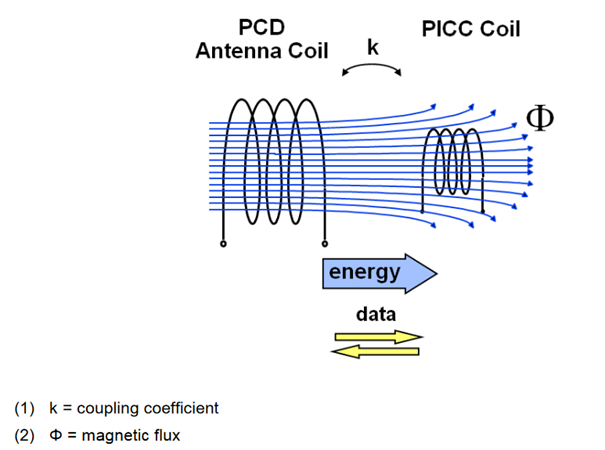 Figure 1. Magnetic coupling between reader (PCD) and card (PICC) [1]
Strong coupling is required to achieve a reliable communication between the reader and tag.
The blocks and components used in the Tx part are shown in Fig 2. Every NFC antenna needs a special matching circuit. All readers are usually tuned in the open air (with no detuning influences nearby).
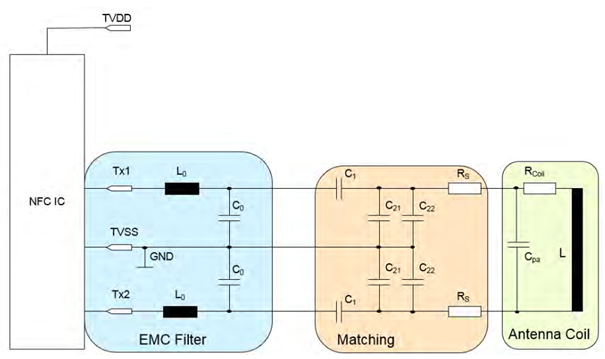 Figure 2. Typical EMC filter and matching circuit configuration[1]
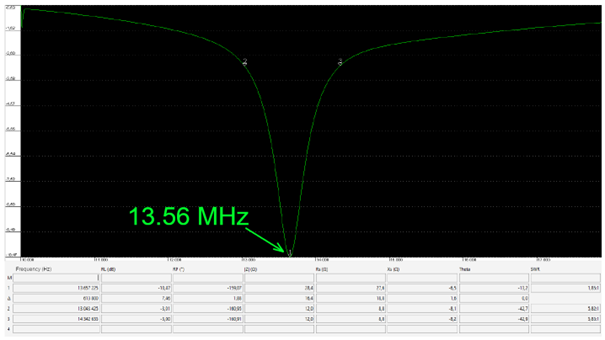 Figure 3. Example chart of return loss in case of the Pepper C1 reader in the no-metalwork environment (after fine tuning)
However, when metal comes into play, the behaviour of electromagnetic field becomes more complex.
Different metals have varying degrees of influence on NFC antennas. Ferromagnetic metals like iron and nickel are notorious for their ability to absorb and reroute electromagnetic waves, causing significant detuning effects. In contrast, non-ferromagnetic metals such as aluminium and copper exhibit less interference but can still alter the antenna’s resonance to some extent.
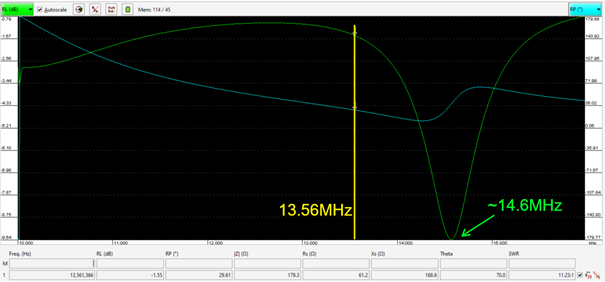 Figure 4. The Pepper C1 placed on the piece of steel (standard open air tuning)
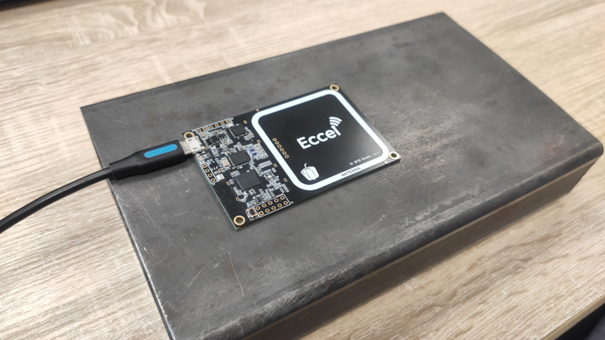
One of the primary mechanisms behind metal-induced detuning is eddy currents – swirling currents of electrons induced by the antenna’s electromagnetic field. These currents create their own magnetic fields, which oppose the antenna’s field, resulting in a shift in resonance. Additionally, the proximity of metal to the antenna can alter its effective capacitance and inductance, further influencing its resonant frequency.
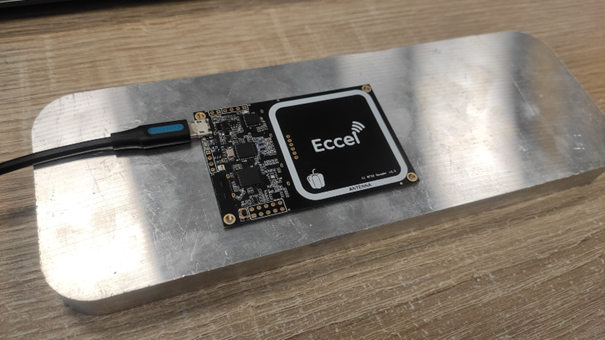
Among the metals commonly encountered in device design, aluminium poses a significant challenge due to its widespread use in smartphone casings and other electronic enclosures. While aluminium itself is non-ferromagnetic, its high electrical conductivity allows for the generation of substantial eddy currents, leading to considerable detuning effects. However, by carefully engineering the antenna’s layout and adjusting its parameters, such detuning can be mitigated to a certain extent.
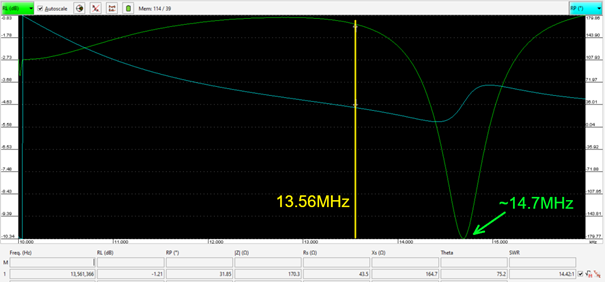 Figure 5. The Pepper C1 reader placed on the aluminium plate (standard open air tuning)
Copper, often used in NFC antennas themselves due to its excellent conductivity, presents a different set of challenges. While copper antennas offer superior performance, surrounding copper structures can still influence their resonance. Designers must meticulously account for these interactions during the device’s layout and ensure sufficient separation between the antenna and other metal components.
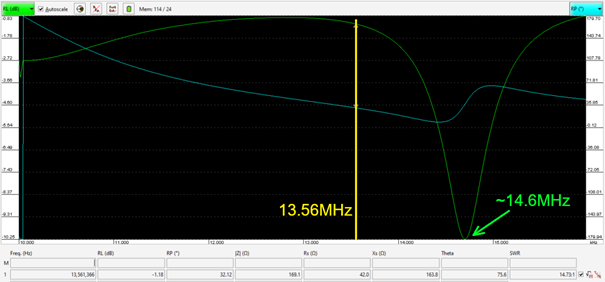 Figure 6. The Pepper C1 placed on the copper plate (standard open air tuning)
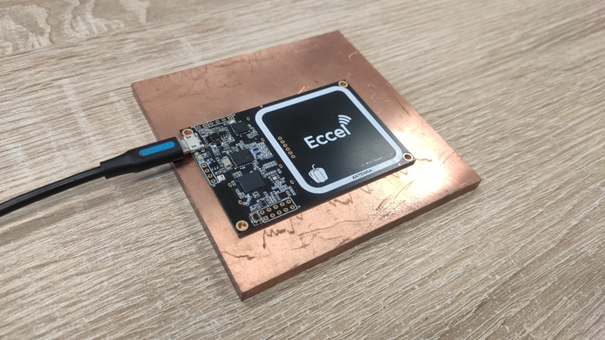 By adjusting the antenna matching circuit the resonant frequency can be moved left to meet the required range and therefore be able to detect RFID tags. The reader performance will be slightly decreased compared to the open-air configuration.
As NFC technology continues to evolve and integrate into our daily lives, understanding the subtle interplay between metalwork and antenna detuning becomes ever more critical.
Eccel Technology offers a custom antenna design and fine tuning in the final environment.
If interested contact us at sales@eccel.co.uk.
